
“The Future” is often treated as something abstract. It’s an idea often tied to innovation, to technology, or what comes next. In the Studio, we build knowing that the future is accessible.
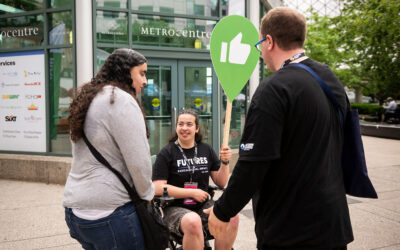
When we talk about “Futures” here, we are naming both a belief and a program. Futures is grounded in the idea that accessibility is not a downstream consideration, but a foundational one, and that disabled people must be central to shaping what comes next.
The future is accessible
Accessibility is often positioned as an afterthought rather than a driver of decision making. Systems are built first, and barriers are addressed later. This logic assumes that exclusion is typically accidental, when in reality it is often the result of who is (and is not) at the table from the beginning.
Disabled people have long understood that the future is not neutral. New systems can expand access, but they can also entrench exclusion. Innovation without intention to meaningfully include tends to reproduce the inequities of the present.
To say “the future is accessible” is not an aspirational statement. It is a responsibility. It means recognizing that every decision made today, whether it be about education, leadership, design, culture, or anything else, actively shapes who will belong tomorrow.
Futures as leadership
Our Futures program, is not about forecasting trends or imagining distant possibilities. It is about leadership development. The Futures program exists to nurture disabled leaders who are thinking critically about the world they want to influence; whether that impact is local or global, personal or systemic. Futures fellows are not positioned as beneficiaries of inclusion, but as agents of change with the capacity to shape culture, policy, and community.
This work is rooted in the understanding that disabled people are already adapting, problem-solving, and navigating complex systems every day. These experiences are not peripheral to future-building; they are essential to it.
Education as future-building
Education plays a central role in shaping our future because it expands agency. It determines who feels entitled to imagine, who feels empowered to lead, and who is given authority to intervene.
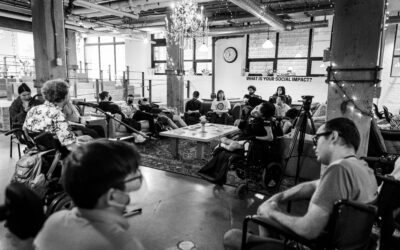
Our Futures program is designed as an experiential learning space where fellows can explore themes of identity, leadership, and impact through a disability lens. It prioritizes lived experience as a source of knowledge and encourages experimentation and reflection.
Rather than prescribing what leadership should look like, Futures creates the conditions for fellows to define it for themselves, grounded in their own communities, values, and ambitions.
Disabled leadership at the center
Too often, conversations about the future frame disability as a problem to be solved by better design or smarter technology. Futures intentionally shifts that framing. While innovations in design and technology are exciting new frontiers for accessibility, disabled people cannot wait for a future “one day” to accommodate them. They are already shaping it; through art, advocacy, entrepreneurship, policy, community leadership etc. Futures exists to support that work, to create space for disabled leaders to develop their ideas, strengthen their voices, and connect with one another.
This is about power, authorship, and responsibility.
Radical. Social. Impact.
At its core, the Futures Program is about impact that is grounded in community and driven by values. It asks fellows to think critically about the kind of change they want to create and the role they want to play in creating it.
Radical, because it challenges assumptions about who leads and how.
Social, because it is rooted in collective experience and shared responsibility.
Impact, because the goal is meaningful, measurable change.
When we say Futures, we are not pointing to something distant or abstract. We are naming a commitment; to disabled leadership, to accessible futures, and to education as a tool for shaping the world we want to live in.
If this thinking resonates with you, we invite you to learn more about Futures: AccessStudio’s leadership program for disabled youth who want to make a positive impact in their communities and beyond.
Applications are now open.
[Click here to learn more about the Futures program]


0 Comments